
North Sydney's Works Zone permit: why no removalist uses it for your move
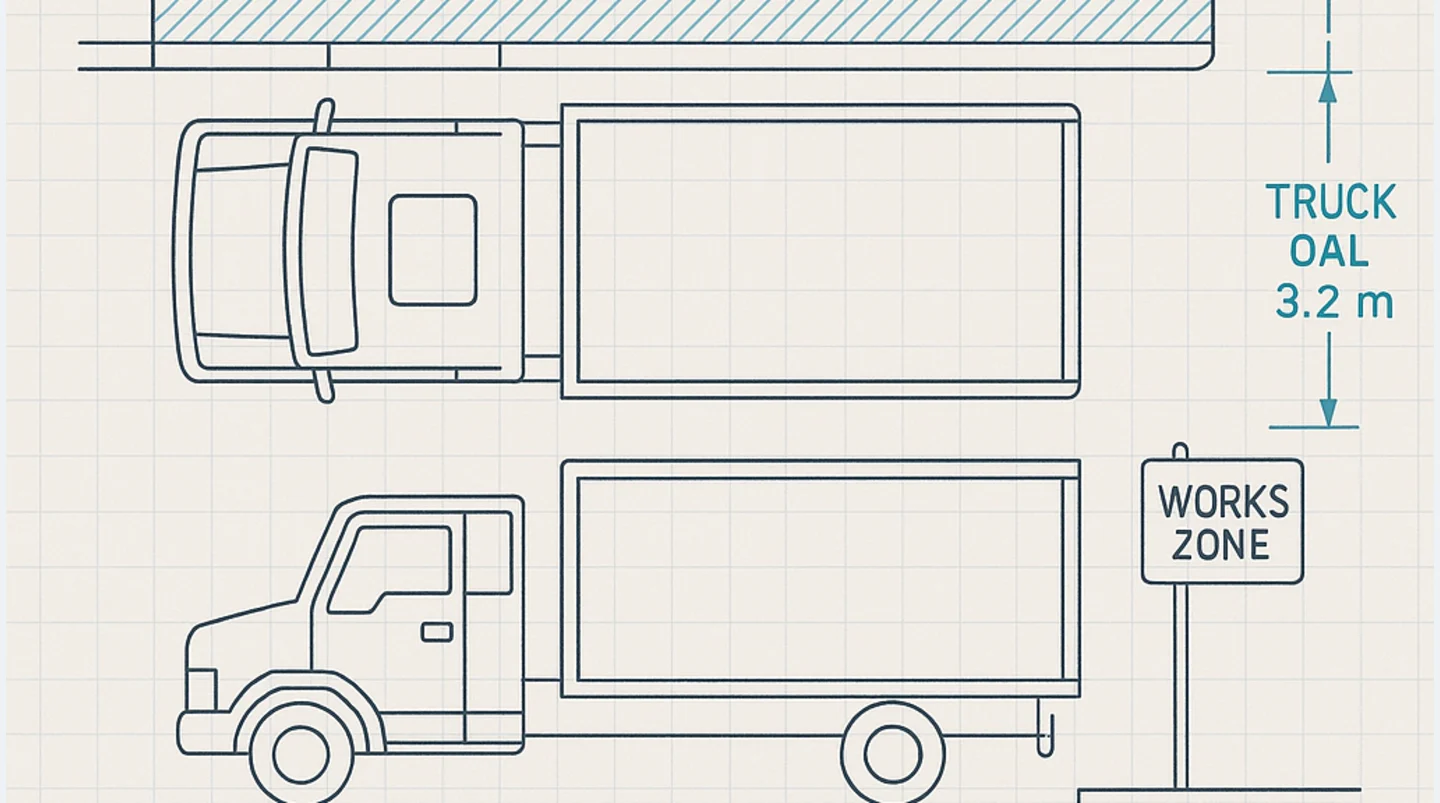
Once people realise there’s no cheap on-demand permit to park a removal truck on the Lower North Shore, the next question is usually a sharp one: but North Sydney does have a permit that reserves road space, doesn’t it? Why don’t you just use that?
It’s a fair question, and the answer is worth spelling out, because the permit is real. North Sydney’s Works Zone genuinely reserves a length of kerb for a vehicle to load and unload. On the face of it, that’s exactly what a move needs. The reason no removalist ever touches it for a household move isn’t laziness or secrecy. It’s the fine print, and once you read it, the whole idea collapses.
What a Works Zone actually is
Straight from North Sydney Council’s own page: an on-street work zone, sometimes called a construction loading zone, is “a designated section of road where vehicles involved in construction work can stop to load and unload materials.”
Read that line again and the word doing the work is construction. This is a builder’s instrument, designed for a job site that runs for months and needs trucks dropping materials day after day. It was never shaped around a family moving a two-bedroom flat in a single morning. And the cost-and-time structure makes that unmistakable.
The full breakdown
Here’s what applying for a Works Zone actually involves, taken directly from the council’s page.
| Item | What the council requires |
|---|---|
| Application fee | $1,990.00, payable in full before the application is even considered |
| Security deposit | $10,000 for developments valued up to $4 million; $25,000 above that |
| Per-metre weekly fee | Charged on top, from $103 up to $370 per linear metre per week depending on street type and metering |
| Minimum duration | 16 weeks (“the initial duration for a works zone permit is 16 weeks”) |
| Review time | Allow 30 business days for the Traffic and Transport team to assess it |
| Committee sign-off | Must be endorsed by the Local Traffic Committee before it’s approved |
| Installation | The zone goes in 14 days after the security deposit is received |
Add it up. Before a single box is lifted, you’re looking at a $1,990 fee, $10,000 locked away, weekly metreage charges, a six-week-plus wait for review and committee endorsement, and a commitment that runs four months minimum. For a move that takes one day.
And it’s explicitly not for this anyway
Even if someone were willing to wear all of that, the permit rules them out in plain language. The council states a Works Zone “is not to be used for commuting or parking by builders’ tradespersons or visitors to the site.” It’s reserved for the construction vehicles doing the loading, on an active building project. A removal truck on move day is neither.
So the door is shut from two directions at once: the cost and timeline make it absurd for a household move, and the conditions of use exclude it regardless. There is no version of a Works Zone that becomes “the permit you get to park the removal truck.” It simply isn’t that product.
Why this matters more than it sounds
This isn’t trivia. The Works Zone is the single thing that makes people believe a quick removal-truck permit must exist somewhere, because here’s a council instrument that clearly reserves kerb space. Once you see that even this one is construction-only, the picture settles: across North Sydney, Willoughby, Mosman and Lane Cove, there is no quick permit to reserve the kerb for a removal truck. The councils issue resident, visitor and trade permits, and none of them does this job. (We walk through all four councils in our removal-truck permit guide.)
That changes how a sensible move gets planned. You stop trying to control the kerb and start working with it.
What we do instead
In a tower, the move runs through the building, not the street. We book the loading dock, book the goods lift the building locks off for the move, and the truck uses the dock. The council kerb barely comes into it. The real planning is the building’s: the lift window, the dock height, the certificate of currency your strata wants to see, the move bond and the permitted day.
On a house street, where there’s no dock, the honest method is straightforward and it works:
- Scout the spot. We look at your street and the destination ahead of time and pick where the truck sits legally with the shortest, cleanest carry to the door.
- Start early. Get the truck in before the street fills, especially near the village strips and the station precincts where parking turns over fast.
- Work to the actual rules. The truck obeys the ordinary kerb signs. Where a restriction on your exact street is genuinely unclear, we’ll point you to the council to confirm rather than guess.
None of that needs a $1,990 permit and a four-month wait. It needs a crew that knows the Lower North Shore well enough to plan the parking and the building access properly, at both ends.
The honest bottom line
The Works Zone is a real permit that really does reserve kerb space, and that’s exactly why it’s the most convincing wrong answer to “how do I park the truck?” It’s a construction product with construction costs and construction conditions, and no removalist uses it for a house move. The move you’re actually doing is governed by your building and run with good legal parking and good timing. Tell us your two addresses and roughly when you’re moving, and we’ll plan the dock, the lift and the kerb for your specific streets, no mythical permit required.
Common questions
Can I use North Sydney's Works Zone permit to park the removal truck for my move?
In practice, no. A Works Zone is a construction instrument. Per the North Sydney Works Zone page, it costs $1,990 to apply, requires a $10,000 security deposit, runs a 16-week minimum, takes 30 business days to review and must be endorsed by the Local Traffic Committee. The council also states it's "not to be used for commuting or parking by builders' tradespersons or visitors." No removalist applies for one to move a household, so the truck instead works to ordinary kerb rules and the building's loading dock.
What exactly is a Works Zone, then?
In North Sydney's words, an on-street work zone (sometimes called a construction loading zone) is "a designated section of road where vehicles involved in construction work can stop to load and unload materials." It's built for builders running a job site over months, which is why the fees, the deposit and the 16-week minimum all make sense for construction and none of it makes sense for a one-day move. Source: North Sydney Council.
So how does the truck actually park on move day?
Through the building and the ordinary road rules, not a special permit. In a tower, you book the loading dock and the goods lift, and the truck uses the dock. On a house street, there's no bay to reserve, so it comes down to legal parking, a spot scouted in advance and an early start before the street fills up. That's the real Lower North Shore move, and it's exactly what we plan for your two addresses rather than chasing a permit that was never meant for moving house.
Planning a move?
Get a free, no-obligation quote and we'll plan the access at both ends with you.
Get a quote