
Booking the lift, the bond and the certificate of currency: how an apartment move-out really works on the Lower North Shore
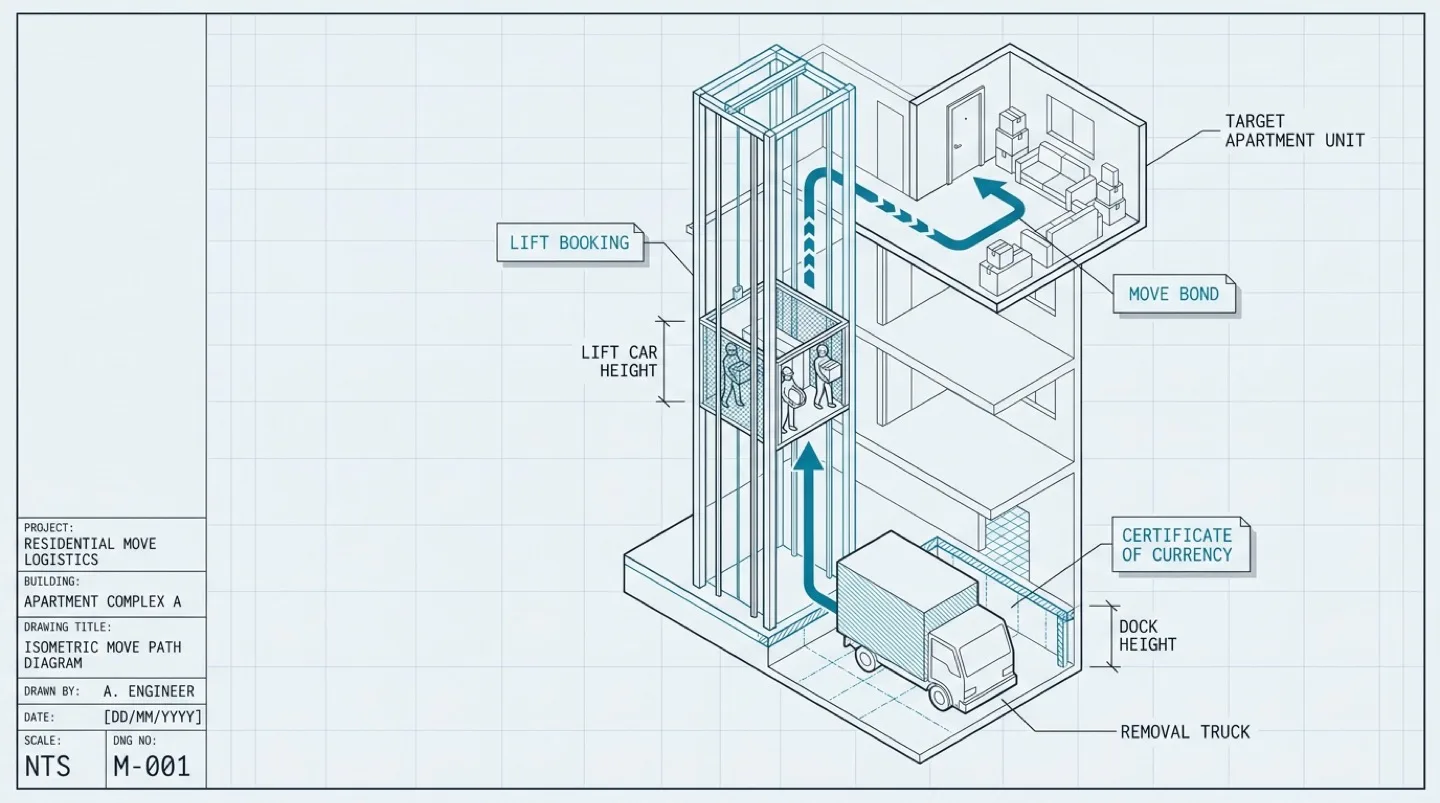
On the Lower North Shore, the moment you’re moving out of an apartment rather than a house, the whole job changes shape. The truck and the crew matter, of course, but the thing that decides whether move-day actually happens is the building, and three pieces of building admin in particular: the lift booking, the certificate of currency and the move bond.
None of these are the removalist being fussy. They flow from the Strata Schemes Management Act 2015 (NSW), under which the owners corporation “has the management and control of the use of the common property,” and from your building’s own by-laws. Get them lined up and the move is smooth. Miss one and you can lose your move-day entirely. Here’s how each works.
First, the lift: book it before anything else
In most apartment buildings here, a move means the building locks off one goods lift for your exclusive use during a booked window, and allows one moving party per lift per day. That single fact drives the whole timeline: if someone else has booked your lift for the day you want, you don’t move that day.
Popular dates, the end of the month, the rare weekend where moves are allowed, book out two to four weeks ahead. So the lift booking, not the truck booking, is the thing to pin down first. The building manager or the strata managing agent runs it, and there are usually a couple of things they’ll want before they confirm:
- your move date and time window,
- the removalist’s certificate of currency (more on that next), and
- sometimes a completed move-in/move-out form and the move bond.
Worth confirming when you book: the dock dimensions and height, and whether there’s a separate loading dock booking as well as the lift. In the newer St Leonards South and Chatswood towers especially, these systems are formal and the building manager expects them followed to the letter.
Second, the certificate of currency: the truck doesn’t come in without it
This is the one that surprises people most. Before your building will approve the lift or dock booking, the manager will routinely ask for the removalist’s certificate of currency, written proof that the mover holds current public liability insurance.
Why? Because your belongings travel through common property, the lift, the lobby, the corridors, that the owners corporation is responsible for. If something gets damaged, the building wants to know there’s insurance behind the people doing the moving. Many buildings ask for cover up to around $20 million, though some accept less. Treat that as a “many buildings require up to roughly $20M, confirm yours” figure rather than a hard universal, because it genuinely varies.
The practical move:
- Ask your removalist for their certificate of currency as soon as you book.
- Forward it to your building manager before the lift is approved, not on move-day morning.
- Check the insured amount your building wants and make sure the certificate meets it.
A professional removalist supplies this on request without fuss. If a mover can’t produce one, that’s a real warning sign, and your building may simply refuse them entry.
Third, the move bond: refundable, and yours to protect
Many buildings hold a refundable move bond, commonly $200 to $500, against damage to common property during the move. It’s not a fee, it’s a deposit you get back if the lift, lobby, corridors and floors come through the move undamaged.
The way to make sure it comes back:
- Photograph the lift and common areas before and after the move, time-stamped.
- Make sure the lift is blanketed and floors and corridors are protected before anything heavy moves.
- Remove all tape, cardboard and floor protection afterwards and leave the lobby, lift and corridor clean.
Damage to common property isn’t just your bond, it can be a by-law liability too, so this is one place a careful crew earns its keep. The amount and the refund process vary by building, so confirm both with your building manager when you pay it.
The three pieces, side by side
| Piece | What it is | Typical figure | Who handles it |
|---|---|---|---|
| Lift booking | Building locks off one goods lift, one move per lift per day | Book 2–4 weeks ahead | Building manager / strata agent |
| Certificate of currency | Proof of removalist’s public liability insurance | Often up to ~$20M (confirm yours) | You request from the removalist, forward to strata |
| Move bond | Refundable deposit against common-property damage | $200–$500 (refundable) | You pay strata; protect it with before/after photos |
All figures are ranges that vary by building. Always confirm the specifics with your own building manager or strata managing agent.
How early should you start? A simple working backwards
Because the lift is the bottleneck, it’s easiest to work backwards from your move date:
- Confirm the lift booking about two weeks out (earlier for a busy date).
- Request and forward the certificate of currency at least a few working days before, so strata can approve the lift.
- Lodge your strata or building-manager notice as early as your building requires; many want anywhere from 72 hours to two weeks, and bigger towers up to around three weeks with documentation.
- Pay and document the move bond before the day, with before photos taken on the morning.
Do those four things in that order and the building side of your move is handled. The crew turns up to a booked lift, a cleared dock and a strata that’s already said yes.
Where we fit
We carry the public liability insurance and supply the certificate of currency on request, we know how the lift-and-dock systems work in the towers across North Sydney, Crows Nest, St Leonards and Chatswood, and we plan the move-day window around your lift booking rather than against it. If you give us your building and your preferred date, we’ll tell you what your building is likely to need and help you get the paperwork in before it becomes a problem. The aim is simple: nothing about the building catches you out on the morning.
Common questions
How far ahead do I need to book the lift for an apartment move?
As early as you can. Most Lower North Shore buildings lock off one goods lift for a move and allow only one moving party per lift per day, and popular dates (end of month, weekends where they're allowed) book out two to four weeks in advance. Miss the booking and you generally can't move that day. The building manager or strata managing agent handles the booking, and they'll usually want your move date plus the removalist's certificate of currency before they confirm it.
What is a certificate of currency and why does strata need it?
A certificate of currency is written proof that the removalist holds current public liability insurance. Building managers routinely require it before they'll approve the lift or dock booking, because the move happens across common property the owners corporation is responsible for. Many buildings ask for cover up to around $20 million, though some accept less, so confirm the figure your building wants. A professional removalist can supply the certificate on request; ask for it early and forward it to your building manager well before move day.
Do I get the move bond back?
Usually yes. The lift or move bond (commonly $200 to $500) is refundable and held by strata against damage to common property, the lift, lobby, corridors and floors, during the move. To protect it, photograph the lift and common areas before and after, make sure the lift is blanketed and floors are protected, and remove all tape and cardboard afterwards. If nothing's damaged and the areas are left clean, the bond comes back. The amount and process vary by building, so check with your building manager.
Planning a move?
Get a free, no-obligation quote and we'll plan the access at both ends with you.
Get a quote